
Systems Built for Decades of Performance
Septic Installation in Ozark for new construction and replacement systems on residential properties
Septic systems fail when drain fields are placed in unsuitable soil, when tank sizing doesn't match household load, or when grading directs surface water into the leach field. SWM Land Services is licensed to install septic systems for residential properties in Ozark, handling new construction installations and replacement systems for aging or failing setups. Proper system performance depends on evaluating soil percolation rates, determining appropriate tank capacity, and locating the drain field where groundwater and surface drainage won't interfere with effluent absorption.
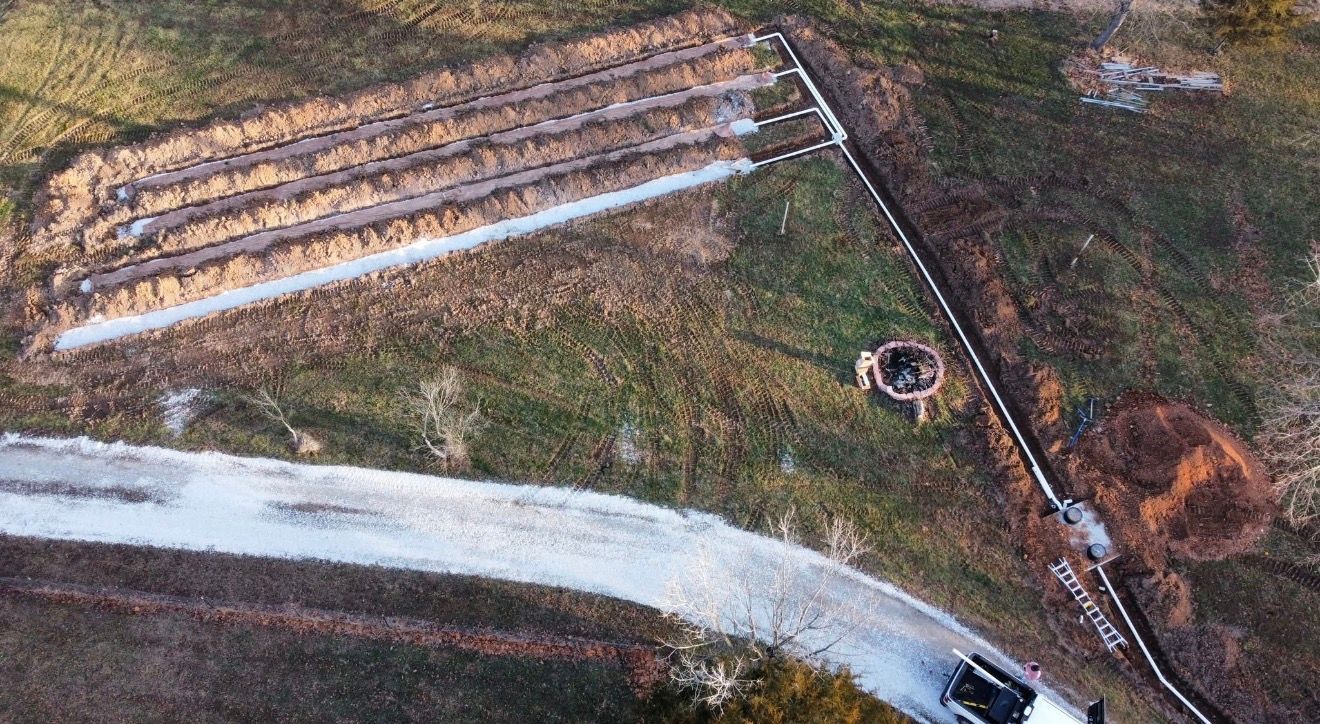
Installation begins with site evaluation to test soil conditions and identify suitable placement areas that meet setback requirements from wells, property lines, and structures. Excavation prepares the tank location and drain field trenches, followed by tank installation, distribution box placement, and drain line layout. Final grading ensures surface water drains away from the leach field rather than saturating the soil that needs to absorb effluent.
Request a property evaluation to determine system sizing and placement options for your septic installation.
How Site Conditions Affect System Design
Soil percolation rate determines how large the drain field must be to handle daily effluent volume. Clay-heavy soil absorbs water slowly, requiring longer drain lines or alternative distribution methods, while sandy or loamy soil may allow a more compact field layout. Percolation testing measures how quickly water moves through soil at the proposed drain field depth, and those results dictate the total square footage of leach field needed to meet local code.
Once the system is installed and operational, wastewater from the home flows into the septic tank, where solids settle and effluent moves to the drain field for soil absorption. You notice that drains function normally without backups, and no wet spots or odors develop in the yard above the leach field. The system handles daily household water use without surfacing effluent or requiring frequent pump-outs beyond normal maintenance intervals.
Tank sizing is based on household occupancy and daily water usage, with larger households or properties with high water use requiring bigger tank capacity to allow adequate settling time before effluent reaches the drain field. Distribution boxes divide flow evenly across drain lines, preventing one section of the field from becoming saturated while others remain dry. SWM Land Services coordinates installation according to local code requirements, completing the process from site preparation through final inspection.
Answers to Frequent Service Questions
Property owners preparing for septic installation typically want to understand system placement, installation steps, and what affects long-term reliability.
What determines where the septic tank and drain field can be located?
Setback distances from wells, property boundaries, and structures are defined by local code, and soil conditions tested through percolation analysis identify areas where effluent will absorb properly without reaching groundwater or surfacing.
How long does septic system installation take?
Installation typically requires several days depending on system size and site conditions, including excavation, tank and field placement, backfilling, and grading work, with additional time for inspections before the system is approved for use.
Why do some septic systems fail prematurely?
Undersized tanks, drain fields placed in poor soil, or surface water drainage directed into the leach area all cause systems to fail before their expected lifespan, which is why site evaluation and proper grading matter as much as component quality in Ozark installations.
What maintenance does a new septic system require?
Tanks should be pumped every three to five years depending on household size, and the drain field area should remain free of vehicle traffic or deep-rooted plants that can damage distribution lines or compact soil needed for effluent absorption.
How is the drain field installed to ensure even distribution?
Trenches are excavated to uniform depth and slope, drain lines are laid with consistent spacing, and gravel bedding surrounds the pipes to distribute effluent along the entire line length before it enters surrounding soil.
SWM Land Services handles septic installation from site preparation through system completion, coordinating the work with local inspection requirements. Schedule a consultation to discuss your property's septic system needs and receive a project estimate.