
Foundations Start with Code-Compliant Excavation
Footings in Ozark for residential and commercial foundation excavation meeting frost depth and bearing capacity requirements
Footings excavated to incorrect depth create foundations that shift when ground freezes, crack under load, or fail inspection before concrete gets poured, which pushes construction schedules back by weeks while contractors argue about whose mistake caused the problem. SWM Land Services excavates footings to building code specifications across Ozark and the surrounding 417 area, removing unsuitable soil, backfilling with proper material where bearing capacity falls short, and compacting per spec before foundation contractors arrive. Springfield metro frost line requirements and soil composition specific to each site determine excavation depth and preparation methods, which integrate into the larger site development workflow rather than happening as an isolated task.
Excavation involves cutting to design depth verified by engineering drawings, removing any organic material or unsuitable soil encountered below grade, and confirming bearing capacity meets foundation load requirements before concrete forms go up. Width and depth follow code minimums adjusted for soil type and structural loads, with additional considerations for sites where expansive clay or high water tables affect long-term stability. Inspections happen before backfill begins, so documentation stays current and foundation work proceeds without delays waiting for approvals.
Request a footing excavation consultation to review depth requirements and soil conditions before scheduling foundation construction.
Why Footing Depth Standards Exist in Missouri
Frost penetration in Missouri reaches depths that vary by winter severity and ground cover, but code requirements set minimum footing depths below the established frost line to prevent heaving when frozen ground expands and contracts through seasonal cycles. Excavating to these depths removes the risk of foundation movement that cracks walls, shifts door frames, and creates gaps where water infiltrates basements. Soil bearing capacity determines footing width—loose or sandy soil requires wider footings to distribute structural loads across more surface area than dense, compacted soil.
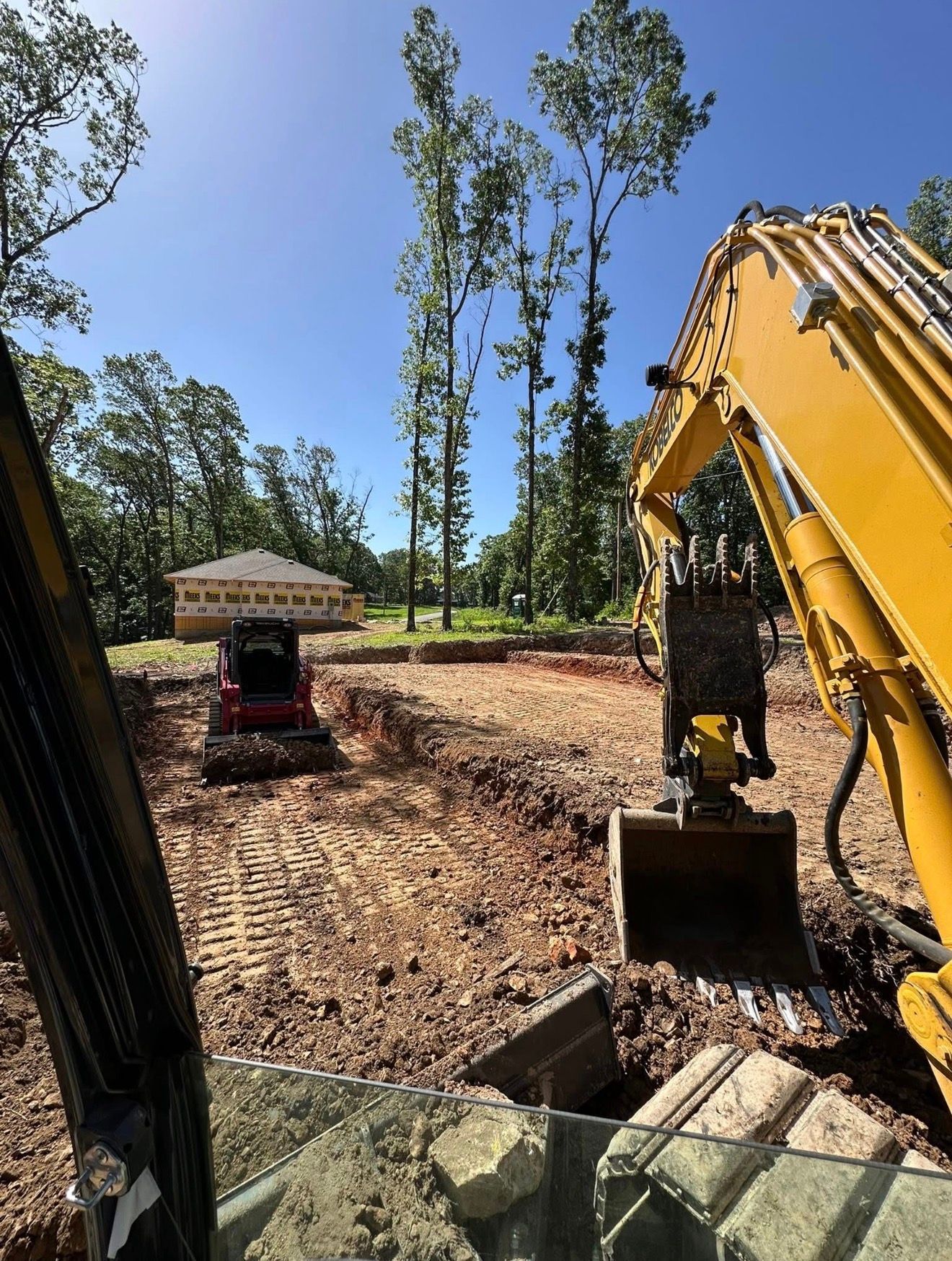
After excavation completes, you'll see trenches cut to uniform depth matching foundation plans, unsuitable material removed and replaced with compacted fill where needed, and clean trench bottoms free of loose soil or standing water that would compromise concrete placement. Forms go up without additional excavation or fill adjustments because depth and width already match specifications verified during the digging process.
Managing footing excavation within the turnkey site development process means the crew already knows soil conditions from earlier grading and utility work, which eliminates surprises when trenches reveal unexpected rock layers or weak bearing zones. Equipment transitions directly from pad preparation to footing cuts without demobilization delays, and inspection scheduling routes through the same contact handling all other site approvals.
What Property Owners Ask About Foundation Excavation
Residential and commercial projects near Springfield often involve questions about depth requirements, soil issues, and how footing work coordinates with foundation schedules.
What depth do footings require in Ozark to meet frost line codes?
Missouri building codes typically require footings to extend at least 30 inches below finished grade in the Springfield area, though site-specific conditions and engineering specifications may require greater depth. The standard accounts for frost penetration during severe winters and provides a safety margin against heaving that damages foundations.
How does soil composition affect footing excavation and backfill?
Rocky soil may require hydraulic hammers or rock saws to reach design depth, while loose or sandy soil needs wider footings to distribute loads across sufficient bearing area. Clay-heavy soil retains moisture and expands when wet, which sometimes requires removal and replacement with engineered fill that compacts without creating pressure against foundation walls.
Why does bearing capacity matter for footing width and depth?
Soil bearing capacity measures how much load each square foot of ground can support without settling, which determines footing dimensions needed to carry structural weight without exceeding safe limits. Weak soil requires wider footings or deeper excavation to reach more competent material, while dense soil allows narrower footings that meet code minimums without overbuilding.
When should footing excavation happen relative to other site work?
Footings get excavated after house pad preparation and utility installation finish, so trenches don't damage compacted pads or cut through recently installed lines. Foundation contractors typically follow within days of excavation completion to prevent trench walls from slumping or filling with water during rain events that delay concrete placement.
What inspection requirements apply before concrete gets poured into footings?
Building inspectors verify excavation depth meets code minimums, trench width matches foundation plans, bearing soil appears suitable for design loads, and any required rebar or reinforcement gets placed correctly. Passing inspection is required before concrete trucks arrive, so scheduling excavation includes coordination with inspection availability to prevent delays.
SWM Land Services handles footing excavation as part of the complete site development timeline, so depth, bearing capacity, and inspection coordination all happen in sequence without waiting on separate contractors. Set up a project review to evaluate footing requirements specific to your foundation design and site conditions.