
Driveways That Handle Freeze and Runoff
Gravel Driveways in Ozark for residential properties requiring all-weather access and effective drainage
Gravel driveways fail when base preparation is skipped or when the surface lacks proper crown for water movement. A driveway that pools water after rain or develops ruts under vehicle weight points to inadequate subgrade compaction or incorrect grading. SWM Land Services grades, prepares base layers, and installs gravel driveways for residential properties in the Springfield metro area, where seasonal freeze-thaw cycles and regional rainfall patterns demand specific construction sequences to prevent washout and surface degradation.
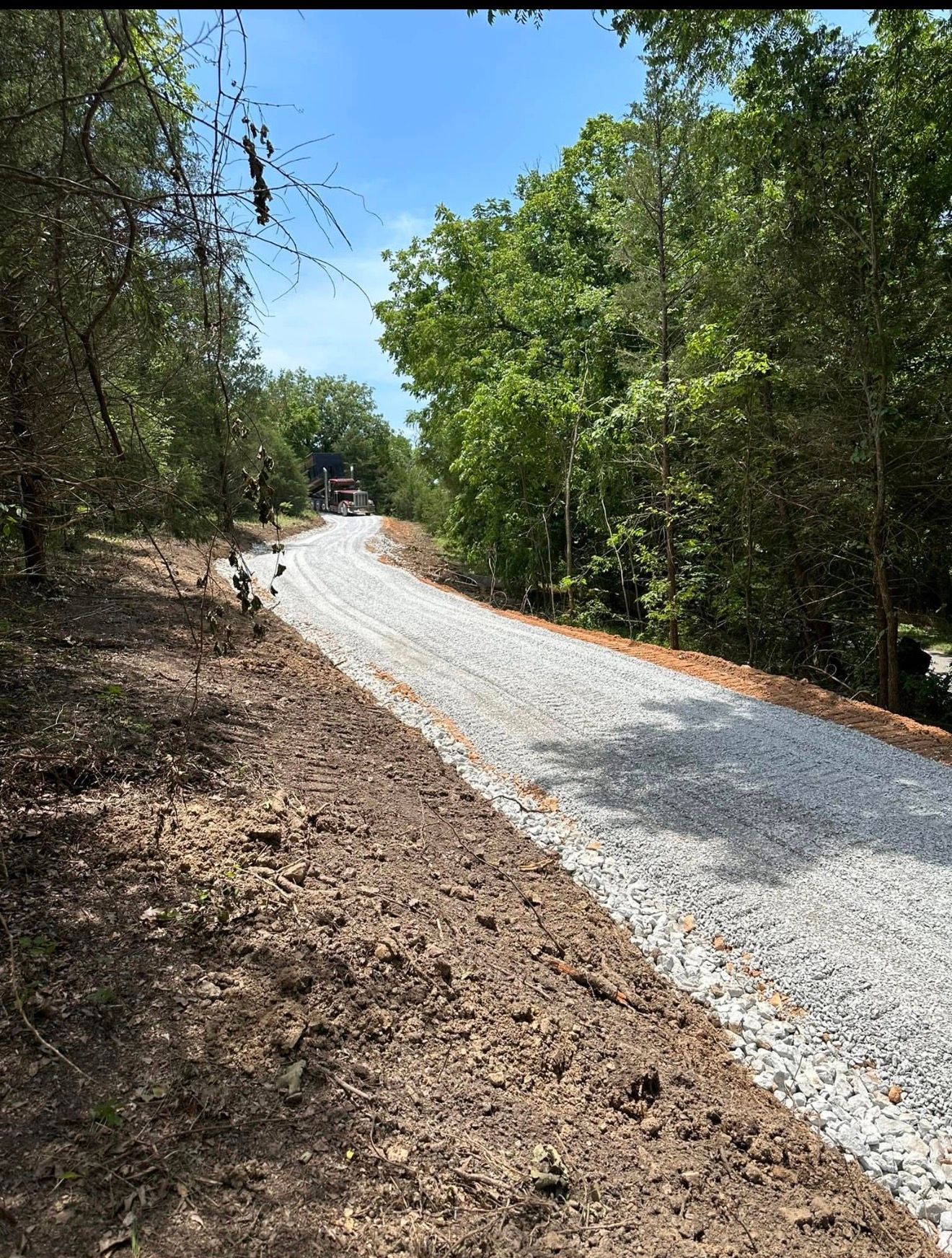
Installation begins with excavating and grading the subgrade to establish drainage slope, followed by compacting the base to provide stable support. Gravel is delivered and spread in layers, graded to create a center crown that directs water to the edges, then compacted to lock the surface. The crown height and edge grading determine whether runoff moves off the driveway or collects in low spots that turn to mud.
Arrange an on-site consultation to review driveway length, drainage needs, and base requirements for your property.
What Proper Base Preparation Requires
Subgrade compaction determines whether gravel stays in place or migrates under vehicle loads. Loose soil beneath gravel allows the surface to sink and shift, creating ruts that collect water and accelerate surface breakdown. The subgrade is compacted before gravel placement, and any soft spots are excavated and replaced with stable material to ensure uniform support across the entire driveway width.
After installation, you notice water moving to the edges during rain rather than pooling in tire tracks, and the surface remains firm under vehicle weight without developing depressions. The gravel layer resists frost heave because the base beneath it drains moisture away from the subgrade, reducing freeze-thaw movement that lifts and cracks paved surfaces in the same conditions.
Gravel type affects how the surface wears and how well it compacts. Angular crushed stone locks together better than rounded river rock, providing a more stable driving surface that resists displacement. Edge restraint or grading to surrounding terrain keeps gravel from migrating off the driveway edges over time, maintaining the crown profile that controls drainage.
Common Questions About This Service
Residential property owners in Ozark typically ask about gravel selection, maintenance needs, and how installation addresses local weather conditions.
What type of gravel works best for driveways in this area?
Crushed limestone or chat in three-quarter-inch size compacts tightly while still allowing water drainage, resisting rutting better than larger or rounded stone that shifts under tires.
How thick should the gravel layer be?
A four-inch compacted layer over prepared subgrade handles normal residential traffic, though properties with heavier vehicles or softer soil may require six inches or a reinforced base layer beneath the gravel.
When does gravel need to be replenished?
High-traffic areas and edges may need additional gravel every few years as material migrates or embeds into the base, though proper crown and edge grading reduce how quickly this happens in Ozark installations.
Why does water pool in some gravel driveways but not others?
Driveways without adequate crown grading or with low spots in the subgrade trap water on the surface, while properly crowned installations shed water to the edges where it drains into surrounding terrain.
How does gravel compare to asphalt for freeze-thaw conditions?
Gravel flexes with frost movement without cracking, making it more resilient in areas with seasonal freeze-thaw cycles, and damaged sections can be regraded without replacing the entire surface.
SWM Land Services applies site preparation and grading expertise to residential driveway projects, handling installation from excavation through final compaction. Contact us to request an estimate based on your property's access requirements and drainage conditions.