
Walls That Hold Ground Where It Belongs
Retaining Walls in Ozark for properties with slope erosion, soil movement, and uneven terrain
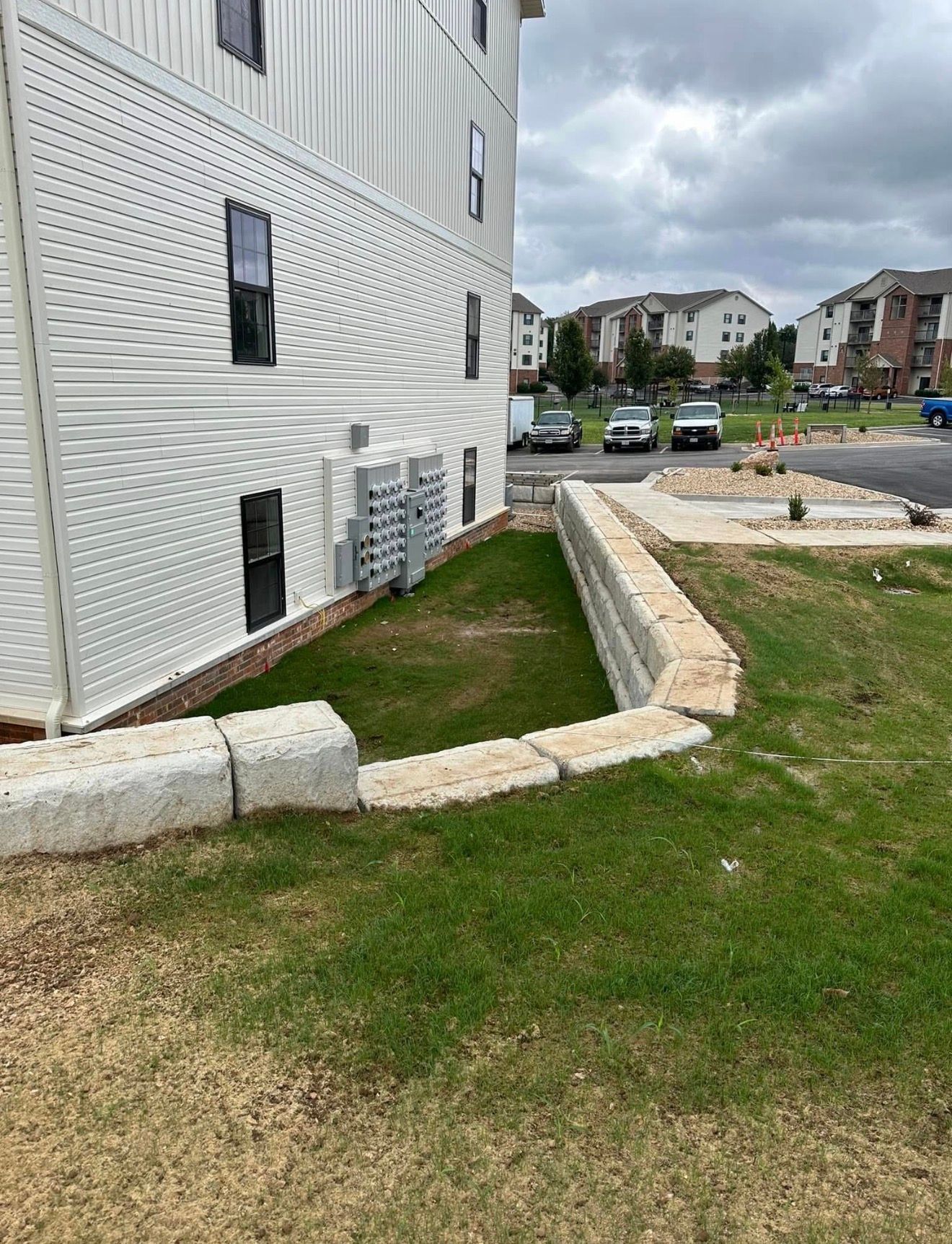
Retaining walls prevent soil from sliding, shifting, or washing away on properties where elevation changes create instability. SWM Land Services builds retaining walls in Ozark that manage grade differences and control water movement across sloped land. You need this work when soil consistently erodes after storms, when landscaping beds collapse downhill, or when driveways and structures sit near unstable slopes that threaten their foundation integrity.
The work involves excavating to stable soil layers, installing drainage systems behind the wall to relieve hydrostatic pressure, and building the structure with materials selected based on wall height, soil type, and load requirements. Proper drainage is critical in the Ozark region where clay-heavy soils retain moisture and expand, putting lateral pressure on walls that lack adequate weep holes or gravel backfill.
Schedule a site evaluation to determine wall height requirements and drainage specifications for your property.
What Proper Retaining Wall Construction Requires
The base must sit below the frost line and on compacted soil that won't settle under the wall's weight and the pressure from retained earth. Backfill material matters because compacted gravel allows water to drain toward weep holes rather than building up behind the wall, which causes bowing, cracking, or complete failure over time.
Once the wall is complete, you'll notice that soil stays in place during heavy rain, runoff flows in controlled directions rather than carving channels through your property, and the grade separation creates usable flat space where slopes previously made landscaping or construction impossible. The wall holds its position without leaning or developing cracks as freeze-thaw cycles occur.
Walls taller than four feet typically require engineering calculations to account for soil pressure and load distribution, while shorter walls can often be built using standard guidelines for base depth, batter angle, and drainage placement. The construction method changes depending on whether the wall will support just soil or also bear weight from structures, driveways, or heavy equipment above.
Answers to Frequent Service Questions
Retaining walls address specific challenges related to slope management and soil stability, and the details of construction vary with site conditions and functional requirements.
What determines how deep the wall foundation needs to be?
The height of the wall, the type of soil being retained, and the frost depth in your area all influence foundation depth, with taller walls and unstable soils requiring deeper footings to prevent settling or tipping.
How does drainage prevent wall failure?
Water trapped behind a retaining wall creates hydrostatic pressure that pushes the structure outward, so drainage systems using perforated pipe and gravel backfill allow water to escape through weep holes rather than building up behind the wall.
When should a retaining wall be built instead of regrading?
You need a retaining wall when the slope is too steep to stabilize with grading alone, when space constraints prevent spreading the grade change over a longer distance, or when you need to create level areas on sloped terrain without removing large amounts of soil.
What causes existing retaining walls to lean or crack?
Inadequate drainage allowing pressure buildup, shallow foundations that shift during freeze-thaw cycles, and poor compaction of backfill soil are the most common reasons walls fail in Ozark, where seasonal moisture fluctuations affect soil volume and stability.
How does wall material affect longevity and function?
Concrete block, poured concrete, natural stone, and timber each handle moisture, weight, and ground movement differently, with material selection depending on wall height, aesthetic goals, and how much lateral pressure the structure must resist over decades of exposure.
SWM Land Services evaluates site-specific slope conditions and soil composition to determine the retaining wall design that will manage your property's grade challenges effectively. Request an on-site consultation to review your terrain and discuss construction specifications.